If you asked any middle school teacher who influences their students the most, they would say that it is their students’ peers.
What is a peer-led leadership curriculum? This curriculum acknowledges this fact and that is refreshing in a world where teachers need to be in the front of the classroom lecturing students about leadership. Growing Leaders has developed a program that encourages students to learn leadership through conversations with their peers.
Why is talking to your peers about leadership more important? Because in this stage of development students are seeking the approval and acceptance of their peers, not their teachers.
This is the basis for a peer-led curriculum; students are much more receptive to a peer who wants to talk and teach leadership, and the peer has a natural ability to influence the student. Growing Leaders takes advantage of this natural dynamic and influences students in their leadership development. Influence is the basis of leadership: leadership is influence, not position. Even if the student facilitator is not a leader in the school, they influence their peers and that’s what leadership is.
How do you think that would look in school?
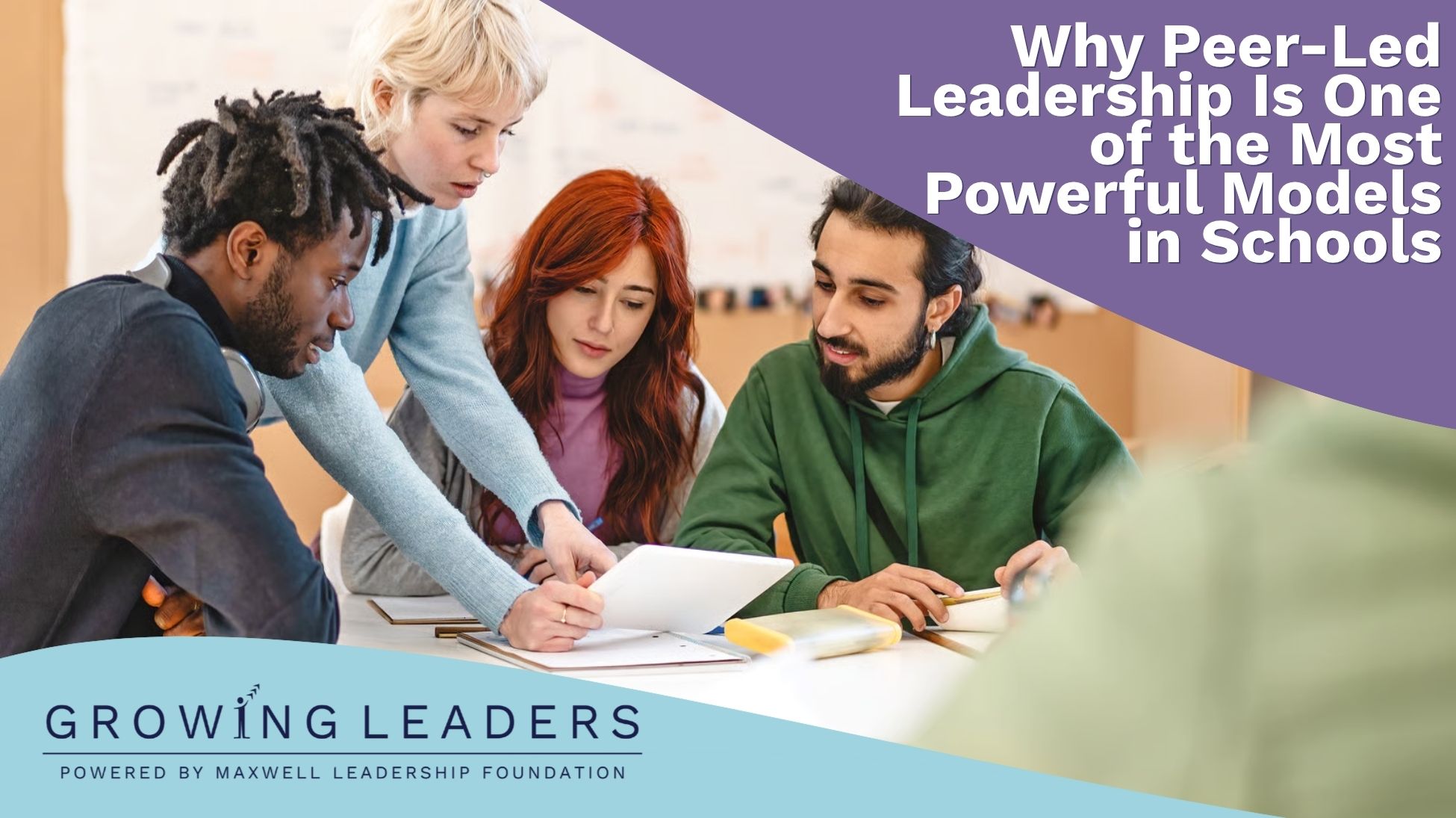
A peer-led discussion allows students to expand on leadership in a peer-led discussion that challenges one another to be better. Students shouldn’t have to be bound by the rules and limits of a formal class presentation by an adult. They can talk to each other on leadership in a round table discussion. The natural give and take that comes with this way is essential to a student’s development in their leadership. Adults cannot compete with their peers when it comes to influencing their students.
The value of this type of discussion can’t be understated. Students in a facilitator program will learn from their peers in ways a teacher just can’t teach them.
Why? Because students are forced to discuss and debate grit and adaptability and apply these concepts to their lives to really understand them. When the student is giving the information, the teacher and the students should be open and receptive to what is being taught. And students are flexible and open-minded in that respect. In facilitator programs, teachers are seeing more and more student leaders emerging from these kinds of discussions and how it impacts the whole school climate. Students who would not normally have a leadership conversation now know they can listen to their peers. And students could have a chance to lead and influence others their own age.
A peer discussion also has value for the facilitators.
Students who are facilitators of these conversations seem to be more comfortable communicating hard to imagine concepts with their peers both in the classroom and out. This is self-leadership in practice in which one learns to lead themselves before anyone else does. A student who leads a conversation about courage has to show up with a measure of it herself. A student who leads a conversation about listening has to listen when a peer pushes back. The duty goes from theory to practice, and the character starts to stick because the student lived it out loud.
Students tend to view a classroom conversation with a teacher as a stuffy, intimidating affair. That dynamic is removed in a peer-driven conversation and students can talk to each other in a way that is comfortable for everyone. That shift from rows of passive learners to circles of courageous, values-driven leaders, that’s what a peer-led curriculum is about.
In a classroom with a small group of students who are discussing leadership in a peer-led setting, a lot can go on. That’s why schools all over the country are turning to iLead programs to facilitate such discussions.
The iLead program helps facilitators to connect with their peers in a way that is beneficial for both sides. There’s no stuffy or formal aspect to an iLead program, where the facilitators are the ones who are driving the discussions on leadership topics and can talk about leadership topics in a way that is right for their peers. Facilitators are also comforted in knowing that what they are doing in terms of leadership is open and transparent and not judged by an adult. Students want to talk and debate and learn from each other and not be told what to do. So iLead programs at all grade levels (elementary, middle school, high school) give students the tools to have these productive conversations. These programs can be used in one of several ways: advisory, career and technical education class, or after school club.
The schools that have implemented the iLead program have seen a positive change in the culture of their school and students take on more leadership roles without overworking the administration.
Find out how the iLead program can change your school culture at growingleaders.com.